Why Modern Massachusetts Homes Require 200-Amp Panels
Decades ago, residential electrical services were sized primarily for basic lighting, refrigeration, and modest consumer electronics. Today, electrification incentives under the Mass Save program and statewide clean energy mandates are accelerating the transition from fossil fuel heating to cold-climate mini-split heat pumps and electric transportation.A standard 100-amp panel rarely has the physical breaker space or bus bar capacity to support an EV charger (requiring a 40A to 60A dedicated circuit) alongside a whole-house heat pump system (often requiring 30A to 50A circuits). Upgrading to 200-amp service expands total usable capacity to 48,000 watts, eliminating nuisance trips, preventing hazardous bus overheating, and providing ample spaces for modern AFCI/GFCI dual-function circuit breakers.
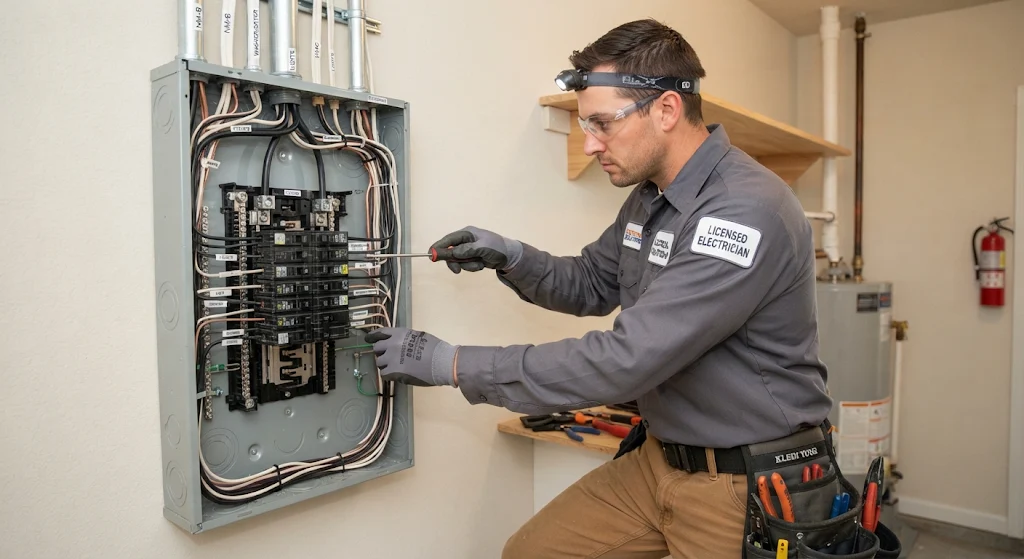
Critical Warning Signs of an Outdated Electrical Panel
Property owners should schedule an evaluation with an independent licensed electrician if their panel exhibits any of the following risk factors:- Obsolete Fuse Boxes: Threaded Edison-base plug fuses frequently suffer from accidental over-fusing, creating serious fire hazards.
- Problematic Panel Brands: Federal Pacific Electric (FPE) Stab-Lok panels and Zinsco/Sylvania panels have documented design flaws where breakers fail to trip under direct overcurrent conditions.
- Tandem Breaker Crowding: Panels crammed with 'cheater' or tandem breakers to create phantom space can overload the main bus bar.
- Corrosion and Moisture Intrusion: Water entering through deteriorated exterior service entrance cables causes rust on breaker contacts and panel enclosures.
- Flickering Lights During Appliance Startup: Voltage sag when refrigerators or compressors kick on indicates inadequate service capacity.
Whole-House Surge Protection & Bus Bar Architecture
A critical aspect of modern 200A service upgrades in Massachusetts is the integration of Type 2 Whole-House Surge Protective Devices (SPDs). Mandated by recent editions of the Massachusetts Electrical Code (527 CMR 12.00 / NFPA 70 Article 242), surge protectors defend sensitive microprocessors in heat pumps, smart appliances, televisions, and EV chargers against utility grid voltage spikes and nearby lightning strikes. In addition, new 200A panels feature tin-plated copper or high-conductivity aluminum bus bars with dedicated neutral and ground bars, preventing neutral overheating and providing a robust infrastructure engineered for decades of safe service.
The Permitting & Utility Service Modernization Process
A service upgrade involves far more than changing the metal box on the basement wall. The independent Master Electrician manages an end-to-end modernization process:- NEC Load Calculation: Conducting comprehensive load calculations under Article 220 of the Massachusetts Electrical Code to size service conductors properly.
- Municipal Permitting: Submitting formal permit applications to the city or town Wire Inspector.
- Utility Coordination: Coordinating with electric utilities (Eversource, National Grid, or municipal light plants) to schedule the service disconnect and reconnect.
- Infrastructure Replacement: Installing new 4/0 aluminum or 2/0 copper service entrance conductors, a modern outdoor meter socket, heavy-duty service disconnect, two 8-foot copper grounding rods spaced at least six feet apart, and bonding to interior water piping.
- Inspection & Re-energization: Passing municipal wire inspection and restoring power with complete safety certification.
Connecting with Independent Electricians Through WATT911
WATT911 serves as an independent connection resource for Massachusetts property owners. We do not dispatch proprietary field crews or perform electrical work directly. When you call our network line at (888) 605-9975, we match your request with an independent, licensed electrical contracting business serving your municipal jurisdiction. You communicate directly with the licensed contractor to review project parameters, obtain written estimates, and verify insurance.